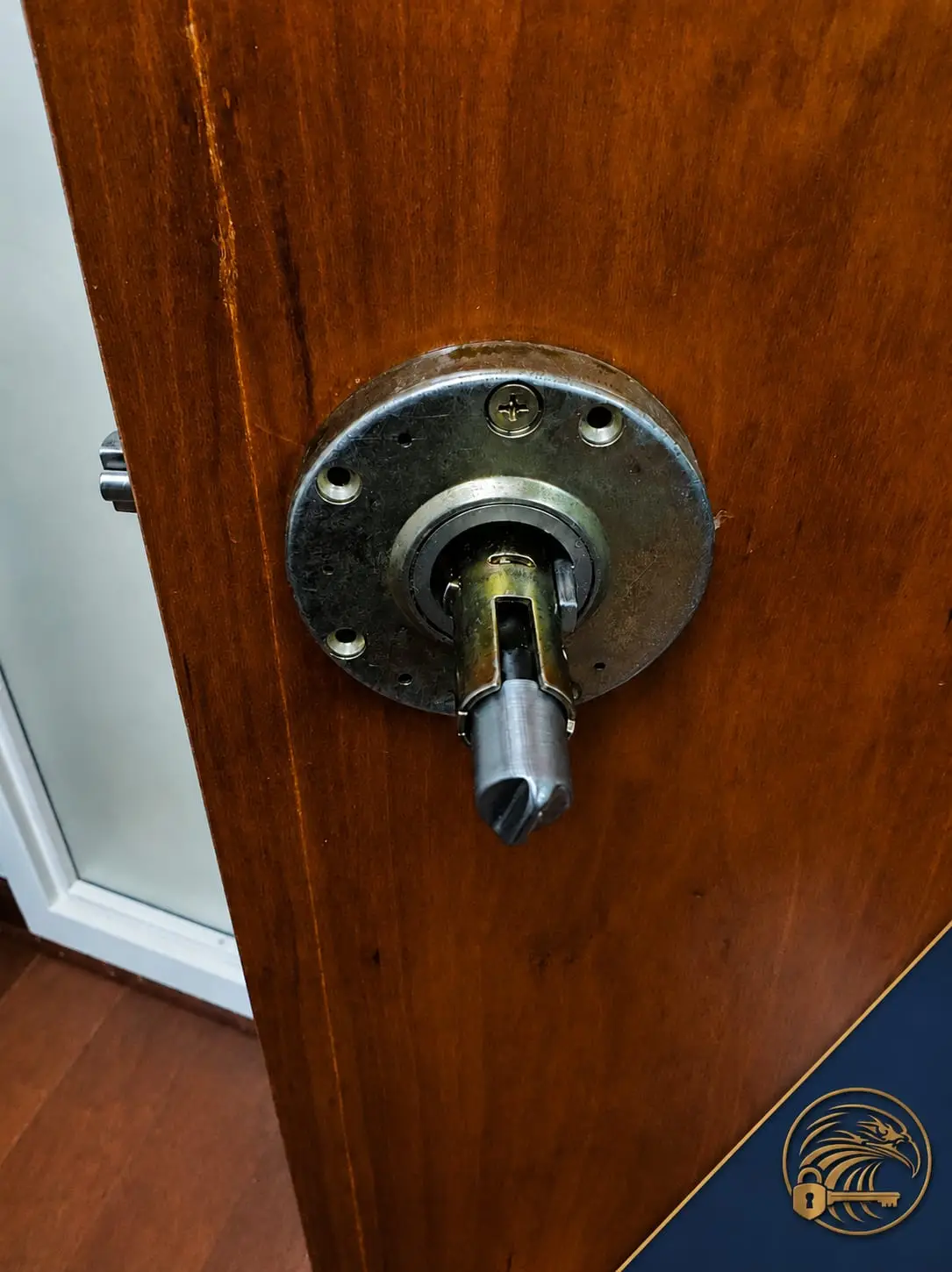
Whether the break-in succeeded, failed, or happened three doors down, the days after are when a home's security actually gets decided. Work through this list in order — it is the same sequence we follow on post-incident calls — and you will cover the weaknesses burglars genuinely use, not the ones in advertisements.
1. Treat every touched lock as compromised
A lock that has been drilled, pried, picked or forced is finished, even if it still turns. Replace it — and because an attempt teaches the attacker your hardware, replace it a grade up, with attention to the strike and frame this time. If keys are missing or unaccounted for in the incident, rekey or replace every lock those keys fit, and do it before the next nightfall, not next week. Our emergency service treats post-break-in securing as urgent for exactly that reason.
2. Audit the door nobody checks
Attackers choose the least visible, weakest entry: the back door with the original builder lock, the garage-to-house door that many owners forget is an exterior door, the side door behind the fence line. Walk your home from the street as a stranger would. Every exterior door gets the same standard as the front: a graded deadbolt, a reinforced strike with three-inch screws into the stud, and a frame without rot or split wood around the latch. Our grades guide explains the hardware tiers in plain terms.
3. Sliders, windows and the quiet entries
Sliding patio doors lift out of tired tracks and pop worn latches; fit a secondary lock or track block and check the rollers so the door sits where the lock expects it. Ground-floor windows need working locks, not paint-sealed latches — and a window beside a door can turn a knob lock into an open invitation, which is why doors with glass near the handle get double-cylinder consideration only where fire code allows an interior key kept within reach. Basement windows and pet doors round out the quiet list.
4. Reset key control from zero
Assume copies exist that you do not know about. Rekey or replace to a known state, issue keys deliberately, and consider a restricted keyway so future copies need your authorization — the upgrade that ends the floating-copy problem permanently. If helpers need access, prefer keypad codes that can be deleted over metal keys that cannot be un-copied. This reset is standard residential work and a typical house is done in an afternoon.
5. Light, sightlines and the message the house sends
Trim the hedge that hides the side door. Put the porch and path lights on timers or motion sensors. Do not let delivered packages advertise an empty house. None of this replaces locks — all of it decides whether your locks are ever tested. Burglars interview houses from the sidewalk, and the interview is mostly about concealment and signs of absence.
6. Write it down
Photograph the new hardware, record which locks were changed and when, store spare keys deliberately, and make sure every adult in the house knows the new setup. Security you cannot describe is security you cannot maintain — and if there is a next time, insurers and police will ask exactly the questions your notes answer.
The paperwork half of recovery
Security recovery has a documentary side that pays off later. File the police report and keep its number; photograph damage before repairs, and keep every invoice for hardware and labor — insurers routinely cover lock replacement after a break-in, and documentation is the difference between a paid claim and an argument. If the home is rented, notify the landlord in writing; in many places the landlord bears duties for restoring locks promptly. And if any keys, garage remotes, or access codes could have been taken or observed, treat them as compromised in the reset: reprogram the garage opener's remotes, change the keypad codes, and tell your alarm company the same day. The goal of the whole exercise is a home whose security state you can describe in one sentence, with paperwork to prove it.