 Eagle
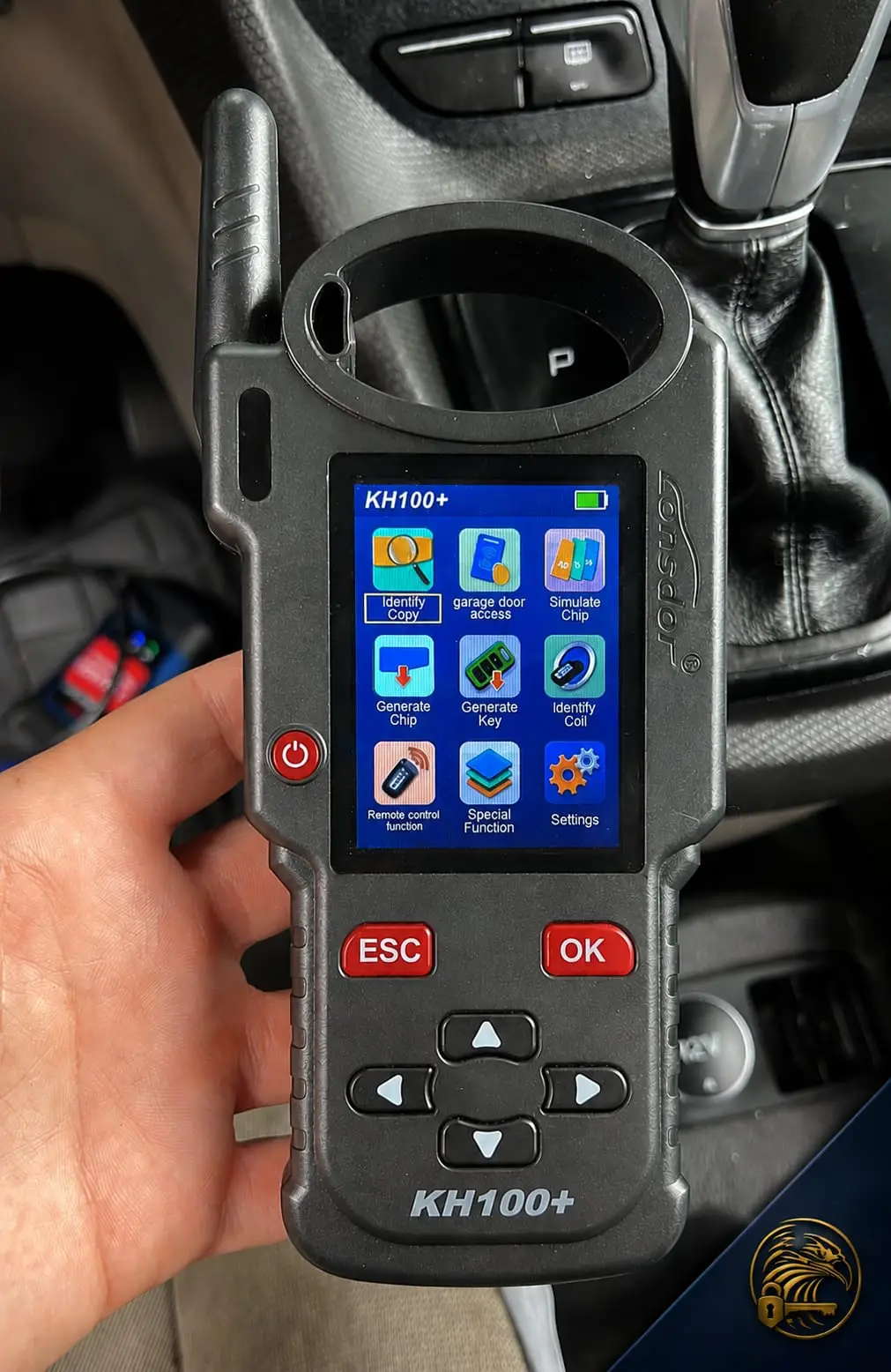
The fast answer: a modern car key is two things at once — a cut metal blade and a small electronic credential your car has to recognize. Cutting copies the blade. Programming is the separate step that introduces the new key's chip or fob to your car's immobilizer so the engine is allowed to start. A key can be cut perfectly and still not start the car if it was never programmed — which is why our auto locksmith and car key service does the programming at your vehicle, with diagnostic equipment, in the same visit.
The three parts of a modern car key
Take almost any key made since the late 1990s apart and you find three systems sharing one piece of plastic. The blade is the oldest: cut to your car's mechanical code, it turns the door and ignition cylinders. Hidden in the head is a transponder chip — a tiny passive device with no battery of its own, which wakes up when the ring around your ignition powers it and answers with a unique electronic ID. The third system, on remote and smart keys, is the radio: lock and unlock buttons, or the proximity signal that lets a push-button-start car know the fob is inside the cabin.
What programming actually does
Your car's immobilizer keeps a list of key IDs it trusts. When you turn a key or press the start button, the car interrogates the chip, compares the answer against that list, and only then enables the fuel and ignition systems. Programming is the procedure that adds a new key's ID to that list: the technician connects a programmer to the car's diagnostic port, the car and the tool exchange security credentials, and the new key is enrolled. On many cars the same session can erase keys that are no longer in your hands, so a lost or stolen key keeps its blade but loses its permission to start the engine. That erasure is the single most valuable step after a key goes missing, and it is covered in our guide to what to do when you have lost your only car key.
Why the hardware-store copy opens the door but will not start the car
This is the most common car key misunderstanding we meet. A kiosk or hardware counter copies the blade — the mechanical half of the key. The copy turns the lock beautifully, because the lock only reads metal. The engine reads the chip, finds an ID it has never met (or no chip at all), and refuses, exactly as designed. The driver experiences this as a car that unlocks, lights up, and will not crank — and often assumes the new key is defective. It is not defective; it is half a key. A true replacement means the blade is cut AND the chip is programmed, in one job.
The main key types, and what each one takes to program
Transponder keys are the plain-looking ones: blade plus chip, no buttons — programming enrolls the chip, the quickest of the electronic jobs. Remote-head keys build the lock buttons into the key head, so two enrollments happen in one visit: the chip for the immobilizer and the remote for the doors. Flip keys fold the blade into a fob body and behave the same electronically, with a hinge that is usually what wears out first. Smart fobs for push-button-start cars are the most involved: the car must learn the fob's proximity credential, and the emergency blade hidden inside still needs cutting. If your situation is not a key at all but the keys locked inside the car, that is an emergency lockout call, and no programming is involved.
What a programming visit looks like
Expect three things. First, proof: a legitimate provider will ask for the registration or title plus your photo ID before enrolling a key — a programmed key is a theft tool in the wrong hands, and our article on verifying a locksmith before the truck rolls explains the standard to hold any company to. Second, information: year, make and model decide the equipment and the procedure, and the VIN lets the technician work to the car's factory key code instead of copying a worn key's mistakes. Third, testing: every function gets exercised in front of you — blade in the door, engine started more than once, every remote button. A job that ends without that test sequence is a job half finished.
Can you program a key yourself?
Sometimes — and it is worth being precise about when. A handful of older models allow onboard programming: a timed sequence of key turns and button presses that puts the car into learning mode, usually only when you already hold a working key. Adding a spare remote on those models can genuinely be a driveway job, and we will tell you on the phone if yours is one of them. The limits are hard ones, though: most modern vehicles require diagnostic equipment that can pass the immobilizer's security handshake, all-keys-lost situations almost always do, and an unprogrammed fob bought online stays unprogrammed no matter how fresh its battery is. If you already own a fob you bought yourself, bring it; when it is the correct part for your car, we can usually program customer-supplied fobs during the same visit.
Signs your fob is failing — and the first thing to try
Fobs rarely die without warning. Buttons that need a second or third press, range that has shrunk to arm's length, an intermittent no-start where the car reports it cannot detect the key, and a case cracked enough to expose the board to weather are all early notices. Before you conclude anything expensive, replace the coin battery with a fresh, name-brand one — a weak battery is the most common cause of every symptom on that list, and the cheapest fix in this entire trade. If a fresh battery changes nothing, the fob itself is failing, and replacement-plus-programming is better as a planned visit than a roadside one.
The spare-key rule that saves the whole situation
Nearly everything expensive or stressful about car keys traces to one fact: enrolling a key while you still have a working one is simpler, faster and cheaper than originating one with none. With a working key present, the car cooperates; with none, the technician is doing security recovery as well as programming. So the standing advice of every honest auto locksmith is boring and absolute: if your household runs on a single key or fob, make the spare now, while it is an errand. Keep it somewhere that is not the car and not the same hook as the primary key.
Need a key cut, programmed or replaced? Call Eagle Locksmith Pros on the national line at (855) 429-3442 — tell us your year, make and model and we will confirm on the phone whether your vehicle is one we program (most common makes are). You can also send a request through the form on our contact page, or find your local team's number from your state page — Texas is one of 36 states we cover. One call, the price confirmed before work starts, and a key that does both of its jobs: opening the door and starting the car.